Dreaming of more space in Woodinville? An acreage home can offer privacy, room to spread out, and flexibility for the way you want to live, but it also comes with a very different due diligence checklist than a typical suburban property. If you are thinking about buying land with a house, outbuildings, or future project potential, a little upfront research can save you from expensive surprises later. Here is what you should know before you buy, and where to focus your attention first. Let’s dive in.
Start With The Parcel
One of the first things to verify is whether the property sits inside the City of Woodinville or in unincorporated King County. That distinction matters because a Woodinville mailing address does not always mean the parcel follows city rules. According to King County parcel research tools, you should confirm jurisdiction, zoning, setbacks, critical areas, flood zones, shoreline constraints, and utility details early.
This is also where you can check what is officially on record for the property. King County notes that parcel research may show building information such as how many structures are recorded, along with square footage and age. If the listing shows a barn, detached shop, or extra structure, you want to know whether county records match what is physically on site.
Check Zoning And Site Limits
Buying acreage does not automatically mean you can use every part of the land the way you want. Before you assume you can expand the home, build a detached structure, or clear a large area, verify the parcel’s zoning and any physical constraints. King County’s property research guidance specifically recommends checking steep slopes, wetlands, floodplain issues, and other critical areas.
These details affect how usable the land really is. A large lot may look flexible on paper, but setbacks, environmental limits, and topography can reduce where improvements are allowed. That is why acreage buyers should evaluate the buildable and functional parts of the parcel, not just the total lot size.
Understand Water, Sewer, Septic, And Wells
Utility questions are often where acreage purchases differ most from in-town homes. Some Woodinville-area properties may connect to public water or sewer, while others rely on septic systems or private wells. Woodinville Water District states that sewer service is generally not available outside the Urban Growth Boundary, with limited exceptions, so do not assume a future sewer connection is simple or even possible.
If you are thinking about an addition, remodel, or future development, paperwork matters too. The district says requests for water and sewer review may require a questionnaire and site plan, and incomplete applications will not be accepted. For buyers, that means future plans should be checked against actual service availability, not just hope.
If the home uses a private well, testing should be part of your due diligence. The Washington State Department of Health says well owners are responsible for testing water and recommends annual testing for coliform bacteria and nitrate. That makes water quality an important practical item to review before closing.
For septic properties, transfer rules matter. King County says septic systems must be inspected by a certified on-site system maintainer before title transfer, and official septic records are available online. In other words, septic and well due diligence is not a bonus step on acreage properties. It is part of the core buying process.
Budget For Hidden Utility Costs
Acreage homes can come with ownership costs that are easy to miss during a quick showing. Even if the house itself looks move-in ready, future utility work or development plans can trigger additional fees and paperwork.
Here are a few items buyers often overlook:
- Water and sewer availability paperwork for additions or future building plans
- Septic inspection requirements and transfer-related county costs
- Private well water testing
- Potential district rates, charges, or system development costs if future utility connections or upgrades are needed
When you are comparing properties, these items can affect the real cost of ownership just as much as the purchase price.
Verify Access And Road Responsibility
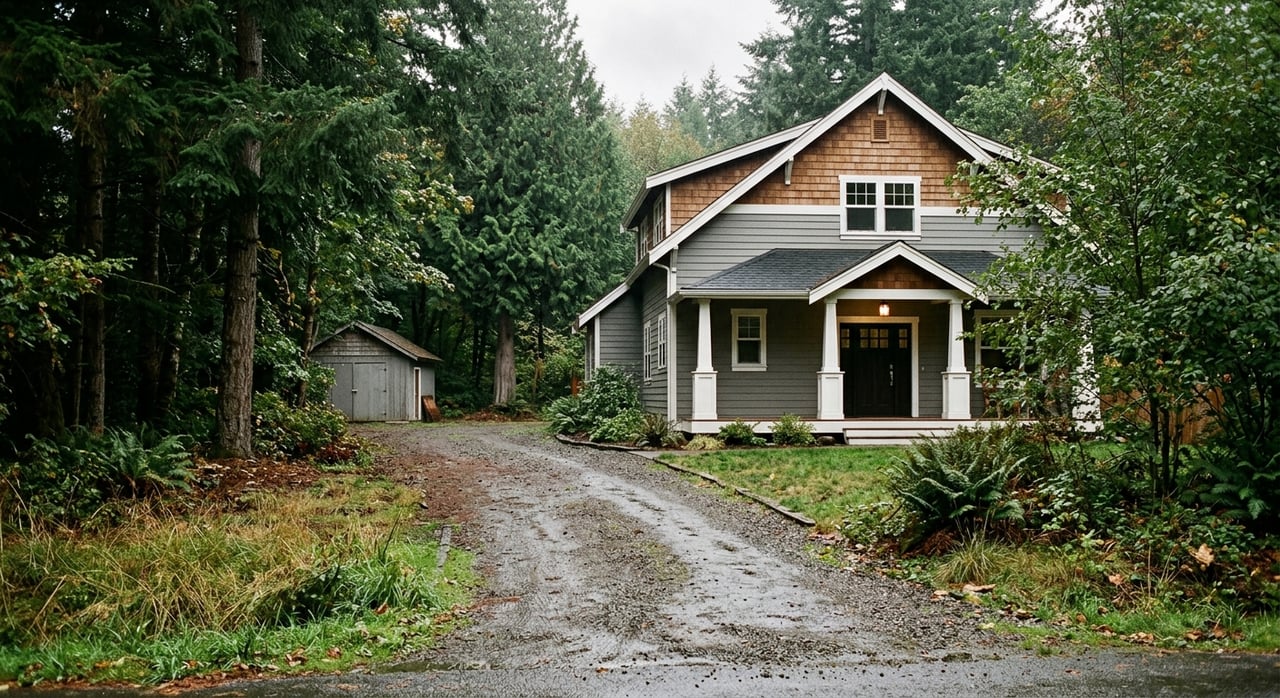
Access can be one of the biggest surprises on larger lots. A long driveway may look charming, but you need to know whether it is public, private, or shared. Under King County road standards, private roads are not maintained by the county unless otherwise specified, and a private maintenance covenant is required for any private road.
That matters because maintenance can include more than paving. The county says maintenance may involve surfacing, shoulders, signs, storm drainage facilities, and vegetation control. If multiple properties share the access road, you will want to understand how maintenance obligations are documented and shared.
Legal access is just as important as physical access. If the property does not connect directly to an existing public roadway, King County says legal access documentation such as a recorded easement or private access tract must be provided. Before buying, confirm that access is both usable and properly documented.
Review Outbuildings And Existing Improvements
Acreage properties often come with extra features like detached garages, barns, storage buildings, carports, retaining walls, fencing, or even pools. Those improvements can add value and function, but only if they were built in compliance with applicable rules. King County guidance on residential accessory buildings says detached accessory structures can require permits.
The county also notes that some small unconditioned structures under 200 square feet may be exempt from a building permit, but they still must comply with code requirements. For buyers, the takeaway is simple: if a structure matters to you, verify that it is permitted where required and that it appears in the property record when appropriate.
A helpful question to ask is whether the parcel record matches what you can see on site. If there are additions or structures that do not appear in public records, that is worth investigating before you move forward.
Ask About Clearing And Grading
A common assumption with acreage is that you can clear brush or reshape the land later if needed. In reality, site work can be limited by permits and environmental conditions. King County’s clearing and grading information says a permit may be required for cumulative clearing over 7,000 square feet on rural-zoned properties, for large earthwork thresholds, and for work in steep slopes, wetlands, landslide hazard areas, aquatic areas, and other critical areas.
This is especially important if you are buying with plans to add parking, create pasture area, install landscaping, or improve usability. More land does not always mean fewer rules. Knowing the site limits now can help you avoid buying a property that does not fit your long-term goals.
Do Not Assume Future ADU Potential
Many buyers look at acreage homes and immediately think about guest space, multigenerational living, or rental flexibility. Those goals may be possible, but they should be verified before they influence your offer. King County’s ADU bulletin says rural-area parcels are generally limited to one ADU per lot, and detached ADUs in rural areas must meet minimum lot-area rules for the zone.
The same bulletin states that an ADU may also require public health approval or a sewer certificate. That means future flexibility depends on more than acreage alone. Zoning, lot size, access, and wastewater capacity all play a role.
If an ADU or secondary structure is part of your plan, confirm these questions early:
- Does the zone allow a detached ADU?
- Is the parcel limited to one ADU?
- Will public health approval be required?
- Is a sewer certificate or wastewater review needed?
- Does the lot’s access and layout support the intended use?
A Smart Buying Strategy For Woodinville Acreage
The best acreage purchases usually come down to asking better questions early. In Woodinville, that means looking beyond the house itself and understanding the parcel, utilities, access, records, and future limits. A beautiful setting can still be the right fit, but only if it supports how you actually want to live and use the property.
When you are comparing acreage homes, focus on what is verified, not just what seems possible. Jurisdiction, septic status, well testing, road maintenance, permits, and development limits all shape the real value of the property. The more clearly you understand those details upfront, the more confidently you can move forward.
If you are considering an acreage home in Woodinville and want help evaluating the practical side of the purchase, connect with Spruce Home Group. You will get local guidance, clear communication, and support as you sort through the details that matter most.
FAQs
What should buyers verify first on a Woodinville acreage property?
- Start by confirming the parcel’s jurisdiction, zoning, critical areas, flood or shoreline constraints, and utility setup through King County property research tools.
What utility issues matter most when buying acreage in Woodinville?
- You should confirm whether the home uses public water, public sewer, septic, or a private well, and review any inspection, testing, or availability paperwork tied to those systems.
What should buyers know about septic systems on Woodinville acreage homes?
- King County requires a septic inspection by a certified on-site system maintainer before title transfer, and buyers can review official septic records online.
What should buyers ask about private roads and driveways on Woodinville acreage?
- Ask whether access is public, private, or shared, and confirm any recorded easements or maintenance covenants because private roads are not generally maintained by the county.
Can a large lot in Woodinville automatically support an ADU or future expansion?
- No. Future flexibility depends on zoning, lot size, access, and wastewater capacity, and an ADU may also require public health approval or a sewer certificate.